The Smart Home Choice That Confuses Almost Everyone at First
Buying your first smart home devices sounds simple until you start reading the boxes.
Wi-Fi.
Bluetooth.
Zigbee.
Z-Wave.
Matter.
Suddenly a basic smart bulb purchase feels like you are choosing parts for a spaceship.
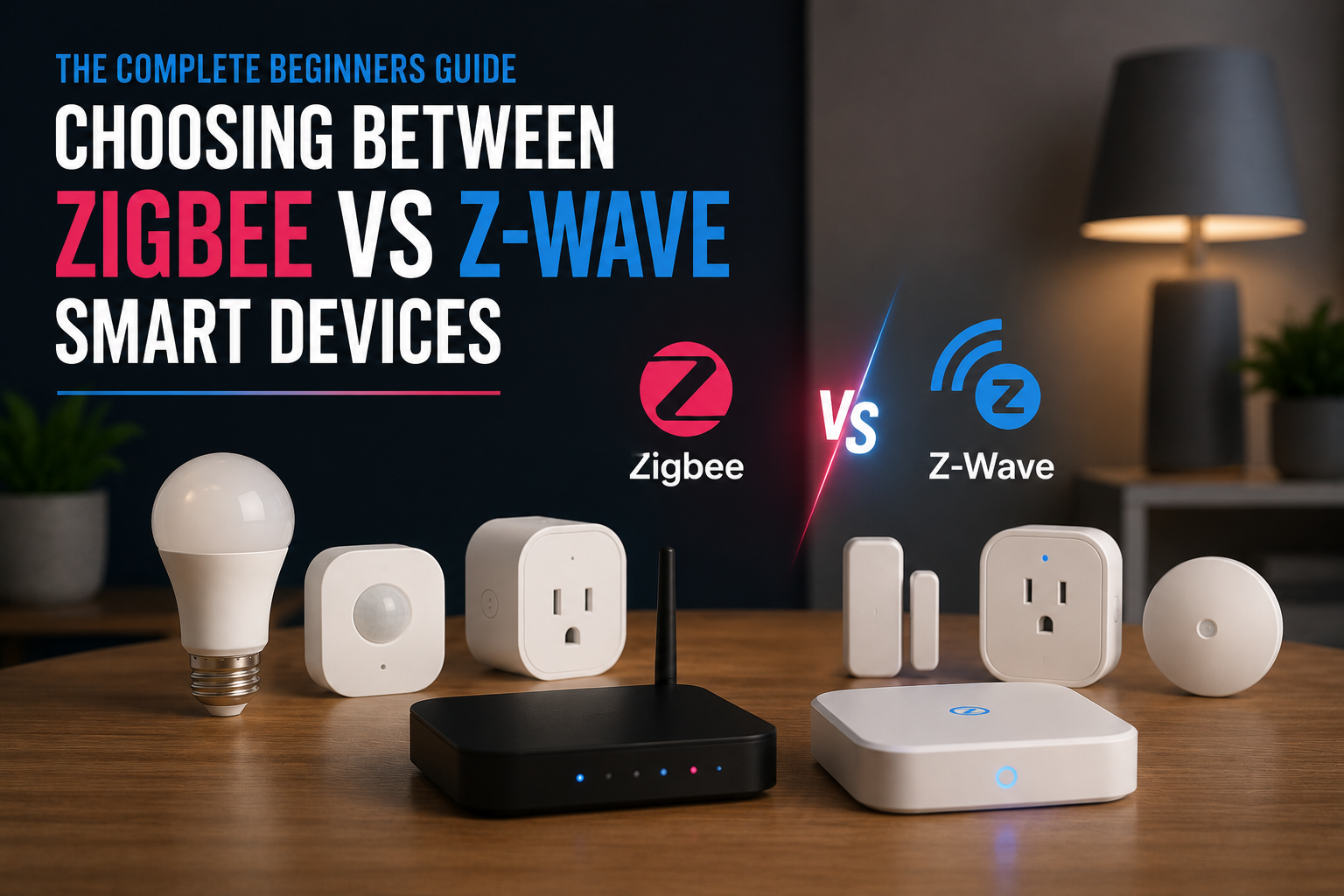
The Zigbee vs Z-Wave question comes up a lot because both are popular ways for smart devices to communicate. They are not exactly competitors where one destroys the other. They are more like different roads that can get you to the same destination.
The better choice depends on the kind of smart home you are trying to build, how much control you want, and honestly, how much patience you have for troubleshooting later.
First, What Are Zigbee and Z-Wave Actually Doing?
Think of Zigbee and Z-Wave as private communication networks for your smart devices.
Instead of every device constantly talking directly through your home Wi-Fi, these systems create a separate network where compatible devices can communicate with each other.
Your smart sensor can talk to your smart hub.
Your smart switch can trigger your lights.
Your motion detector can tell another device what to do.
That is the basic idea.
They are not apps.
They are not brands.
They are the technology underneath the devices.
Why People Move Away From Wi-Fi Smart Devices
Wi-Fi smart devices are popular because they are easy.
Download the app.
Connect the device.
Done.
But when you start adding dozens of devices, things can get messy.
Your router has more work.
Devices depend heavily on internet connections.
A small network problem can suddenly affect several parts of your home.
Zigbee and Z-Wave are popular because they are designed specifically for smart home communication.
How Zigbee Works Inside a Smart Home
Zigbee uses a mesh network.
That means many powered devices can help pass signals around your home.
For example:
- A smart plug in the living room can help extend the network.
- A smart bulb can help another device communicate.
- A sensor can connect through nearby devices.
The more compatible powered devices you add, the stronger the network can become.
This is one reason Zigbee is popular with people who enjoy building larger setups with lots of lights, sensors, and automations.
How Z-Wave Works Inside a Smart Home
Z-Wave also uses a mesh network.
The idea is very similar.
Devices communicate through the network instead of relying only on your router.
One thing many users like about Z-Wave is that it has historically focused heavily on compatibility standards.
The experience can feel more controlled because devices generally need to follow specific requirements to work within the ecosystem.
Zigbee vs Z-Wave: The Real Differences
Device Availability
Zigbee has become extremely common, especially for:
- Smart bulbs.
- Smart plugs.
- Sensors.
- Affordable automation devices.
Z-Wave is also widely supported and is especially common in areas like:
- Security sensors.
- Smart locks.
- Wall switches.
- Professional-style home automation setups.
Neither one is “empty.”
The important thing is checking whether the specific devices you want are supported by your hub.
Price Differences
This is where Zigbee often attracts beginners.
There are many affordable Zigbee products available, making it easier to experiment.
You can build a basic setup without spending a ridiculous amount.
Z-Wave devices can sometimes cost more, especially in categories focused on reliability and security.
Range and Reliability
Both can work very well.
People sometimes argue endlessly about which has better range, but your actual home setup matters more.
A small apartment and a large house will have completely different results.
Walls, device placement, and the number of powered devices all affect performance.
Interference
Zigbee often operates in the 2.4 GHz range, which is also used by many Wi-Fi networks.
In crowded environments, choosing the right channel can help.
Z-Wave uses different frequencies depending on the region, which can reduce certain types of interference.
The Hub Is Usually More Important Than the Protocol
This is the part many beginners discover after buying their first few devices.
The hub matters.
A lot.
A good hub can make different devices feel like one system.
A limited hub can make even great devices frustrating.
Before buying smart devices, check:
- Which protocols the hub supports.
- Which brands work with it.
- Whether automations run locally or through the internet.
Can You Use Zigbee and Z-Wave Together?
Yes.
You do not always have to choose one forever.
Many smart home hubs support multiple communication methods.
A home can easily have:
- Zigbee lights.
- Z-Wave door sensors.
- Wi-Fi cameras.
- Bluetooth accessories.
The hub handles the communication side.
Which One Should a Beginner Pick?
Zigbee Makes Sense If:
- You want affordable smart devices.
- You plan to use many lights and sensors.
- You like experimenting with automation.
- You want lots of product choices.
Z-Wave Makes Sense If:
- You want a more structured ecosystem.
- You care heavily about reliability.
- You are building security-focused automation.
- You prefer devices with stricter compatibility rules.
Mistakes New Smart Home Owners Make
Buying Random Devices First
This is probably the biggest one.
People buy a cheap sensor, then discover their hub does not support it.
A little planning saves a lot of annoyance.
Using Too Many Separate Apps
The whole point of a smart home is convenience.
If you need six apps just to turn off your lights, something went wrong.
Ignoring Network Design
A smart home is still a network.
Device placement matters.
Powered devices matter.
Good planning matters.
Think About Your Future Setup Before Buying
Ask yourself what you actually want.
A few smart bulbs?
Almost any good system can handle that.
A home where lights react to movement, doors unlock automatically, heating adjusts, and every room has routines?
Then choosing the right foundation becomes much more important.
The Best Smart Home System Is the One You Stop Thinking About
The technology itself is not the exciting part.
The exciting part is when everything just works.
You walk into a room and the lights respond.
A sensor does its job quietly.
Your routines happen without you opening five different apps.
Zigbee and Z-Wave can both get you there.
The right choice is simply the one that matches the home you want to create.