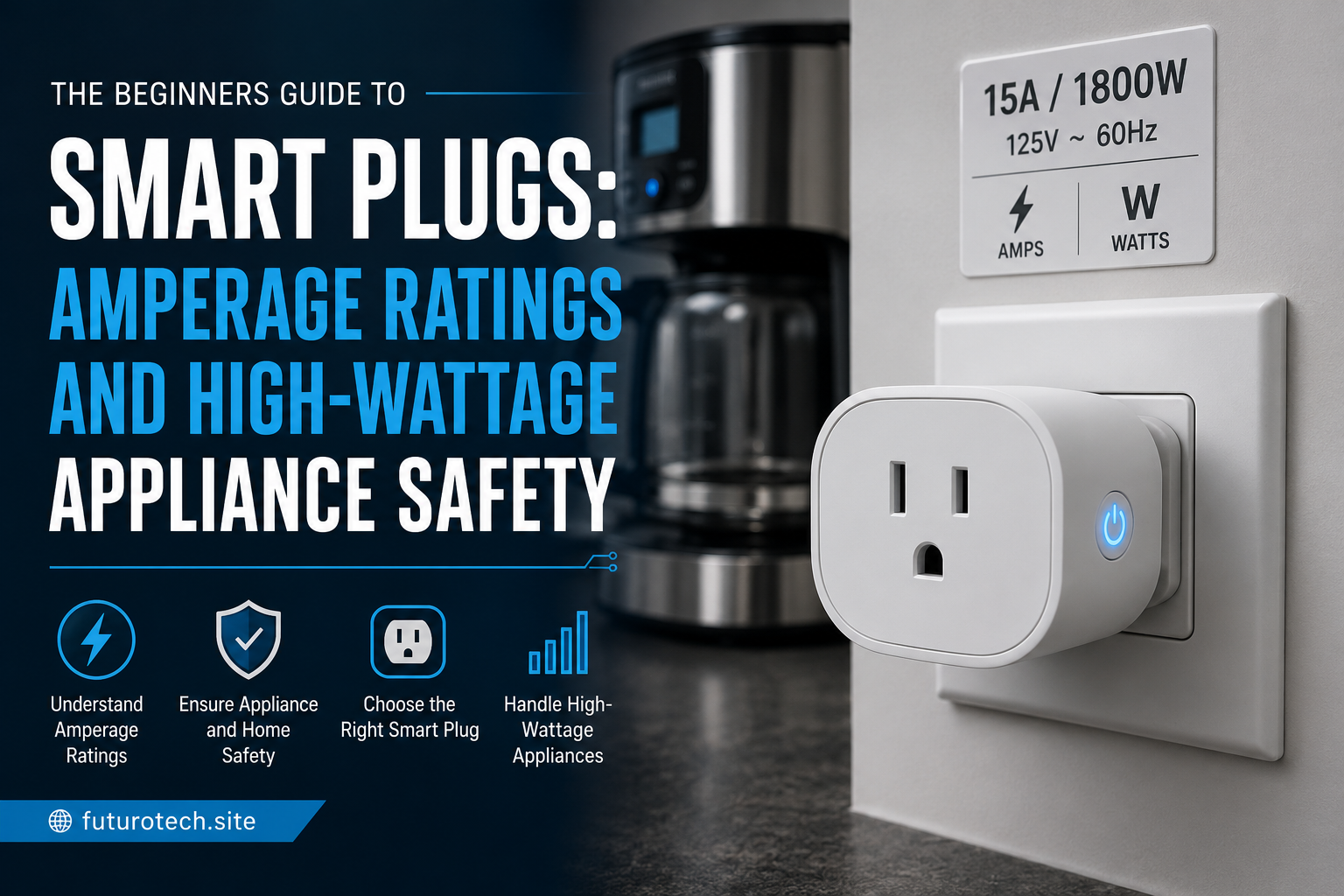
The Beginners Guide to Smart Plugs: Amperage Ratings and High-Wattage Appliance Safety

The Smart Plug Mistake I Almost Made
When I first started using smart plugs, I honestly thought the whole process was almost too easy.
Plug it into the wall. Plug in a device. Connect the app. Done.
And for things like lamps, phone chargers, and small electronics, that mindset works pretty well.
Then I started wondering something dangerous: “Could I use a smart plug for bigger appliances too?”
That question is where things get a little more serious.
Because smart plugs are convenient, but they are not magical power adapters that can safely control anything you plug into them. Understanding amperage ratings and wattage limits is the difference between a smart home upgrade and an avoidable electrical problem.
The good news? You don’t need to become an electrician to understand the basics.
You just need to know what numbers actually matter.
What Amperage Rating Really Means
Amperage, usually written as amps or A, measures how much electrical current a device draws.
Think of electricity like water flowing through a pipe. The current is the amount of flow moving through the system.
A smart plug has a maximum amount of current it can safely handle. If your appliance demands more than that limit, the plug can overheat, fail, or create a safety risk.
Most household smart plugs are designed for common low-to-medium power devices. Things like:
- Lamps.
- Fans.
- Small kitchen appliances.
- Chargers.
- Entertainment devices.
The problem comes when people assume every appliance is basically the same.
They’re not.
Understanding Watts Before Plugging Anything In
Wattage is another number you’ll see when checking appliance requirements.
Watts measure electrical power usage.
A device with a higher wattage generally requires more energy to operate.
A small LED lamp might use only a few watts.
A space heater can use thousands.
That difference matters.
Before connecting an appliance to a smart plug, check the device label or manual for its power requirements. Look for information showing watts, amps, or volts.
A few seconds of checking can prevent a lot of problems later.
Why High-Wattage Appliances Are Different
This is where many beginners get caught.
A smart plug may work perfectly for months controlling a lamp, so someone assumes it can handle a much larger appliance.
Then they connect something like a heater, air conditioner, or powerful kitchen device.
The plug suddenly has a much harder job.
High-wattage appliances often draw significantly more current, especially when starting up. Motors and heating elements can create demanding electrical loads that smaller smart plugs are not designed to handle.
That little plastic device sitting behind your furniture is doing more work than it looks like.
Common Appliances That Need Extra Caution
Some devices deserve more attention before connecting them to a smart plug.
Space Heaters
Space heaters are one of the biggest examples. They consume a lot of power and often run for long periods.
Many safety professionals recommend extra caution with them because overheating risks are higher when electrical components are pushed close to their limits.
Air Conditioners
Air conditioners can also be tricky because compressors have high startup demands.
A plug that appears fine during normal operation may struggle when the appliance kicks on.
Large Kitchen Appliances
Devices like ovens, microwaves, and high-powered cooking equipment should not automatically be connected just because the plug fits.
Physical compatibility does not always mean electrical compatibility.
How to Check If Your Smart Plug Can Handle a Device
Before connecting anything, follow a simple checklist.
- Check the smart plug’s maximum amperage rating.
- Check the appliance’s wattage or amp requirements.
- Compare the two values.
- Consider whether the device has motors or heating elements.
- Follow the manufacturer’s safety guidelines.
The goal is not just making something work.
The goal is making it work safely every single time.
The Difference Between Resistive and Inductive Loads
This is one of those technical details that sounds complicated but actually explains a lot.
Some appliances are simple electrical loads. Others contain motors or components that behave differently when starting.
Resistive loads, like many basic heating devices, tend to draw power in a more predictable way.
Inductive loads, like motors in fans or pumps, can have startup surges that briefly require more power.
That initial spike is why some devices can be harder on smart plugs than their average power rating suggests.
It’s not always about what the appliance uses while running.
Sometimes the startup moment is the thing that matters.
Don’t Ignore the Quality of the Smart Plug
Not all smart plugs are built the same.
This is probably the part many people don’t want to hear because cheaper devices are tempting.
But when electricity is involved, build quality matters.
A reliable smart plug should have clear ratings, proper certification information, and safety features such as overload protection.
A bargain device that hides important specifications is not really a bargain.
Signs a Smart Plug Is Being Overworked
Pay attention if you notice:
- The plug feels unusually hot.
- There is a burning smell.
- The device disconnects frequently.
- The plug makes unusual sounds.
- The appliance behaves inconsistently.
A little warmth can be normal depending on the device.
Excessive heat is not something to ignore.
Smart Plugs Are Powerful When Used for the Right Jobs
The easiest way to enjoy smart plugs is understanding their limits.
They are fantastic for automation, convenience, and controlling everyday devices.
Turning lights on automatically? Great.
Scheduling electronics? Perfect.
Creating energy-saving routines? Absolutely.
But when it comes to large appliances with heavy power demands, a little caution goes a long way.
The smartest setup is not the one where every device is connected.
It’s the one where every connection makes sense.
Once you understand amperage ratings and wattage limits, smart plugs become much less confusing. You stop guessing, stop worrying, and start using them the way they were actually designed to be used.