The Porch Light Problem That Gets Annoying Fast
There is a small daily task that most people barely think about until it starts happening over and over.
Turning outdoor lights on and off.
You leave home before sunrise and the porch is dark.
You come back in the evening and realize you forgot to switch the light on.
Or you turn it on manually, then forget to turn it off the next morning.
It is not a huge problem, but it is exactly the kind of repetitive thing smart home automation is good at handling.
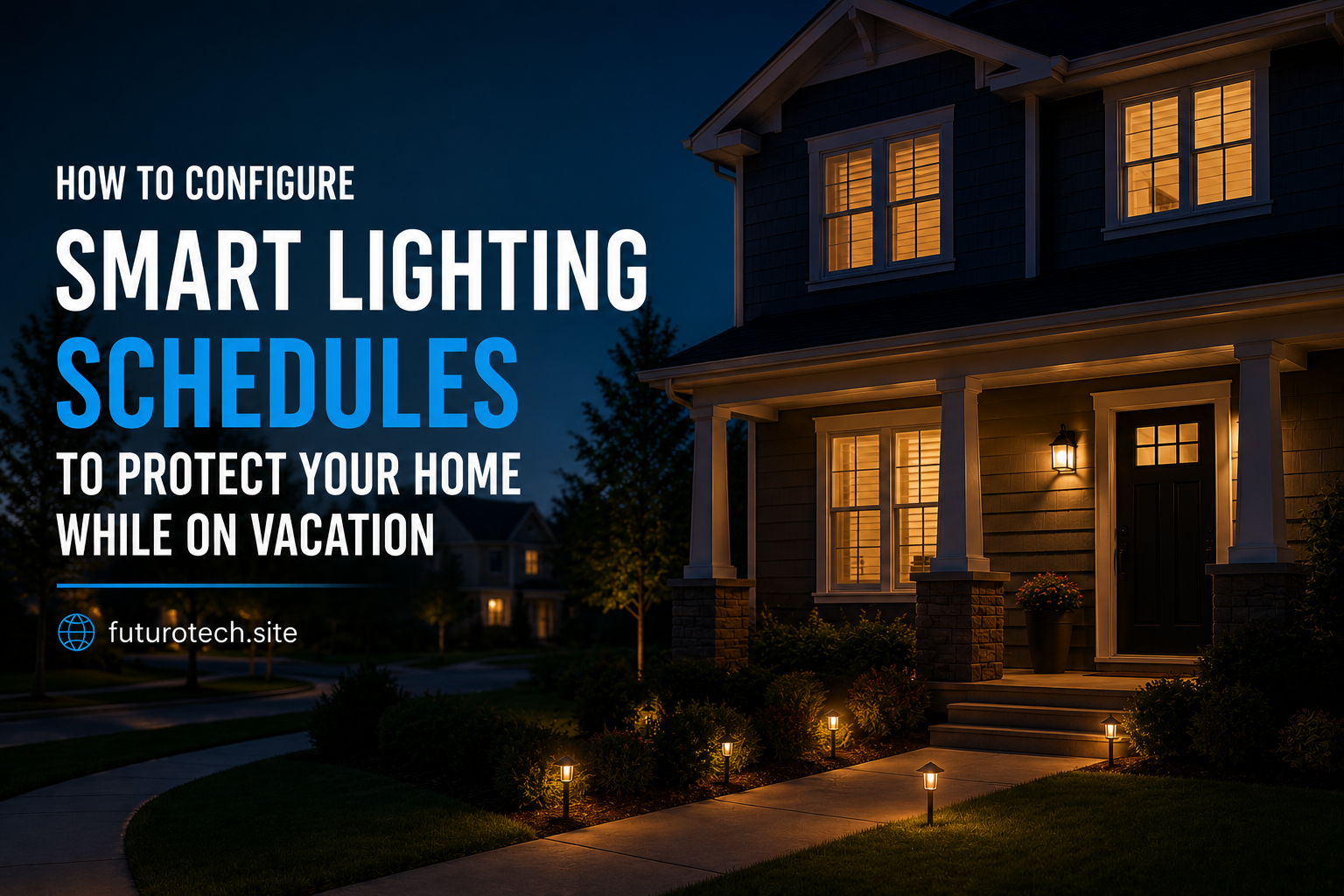
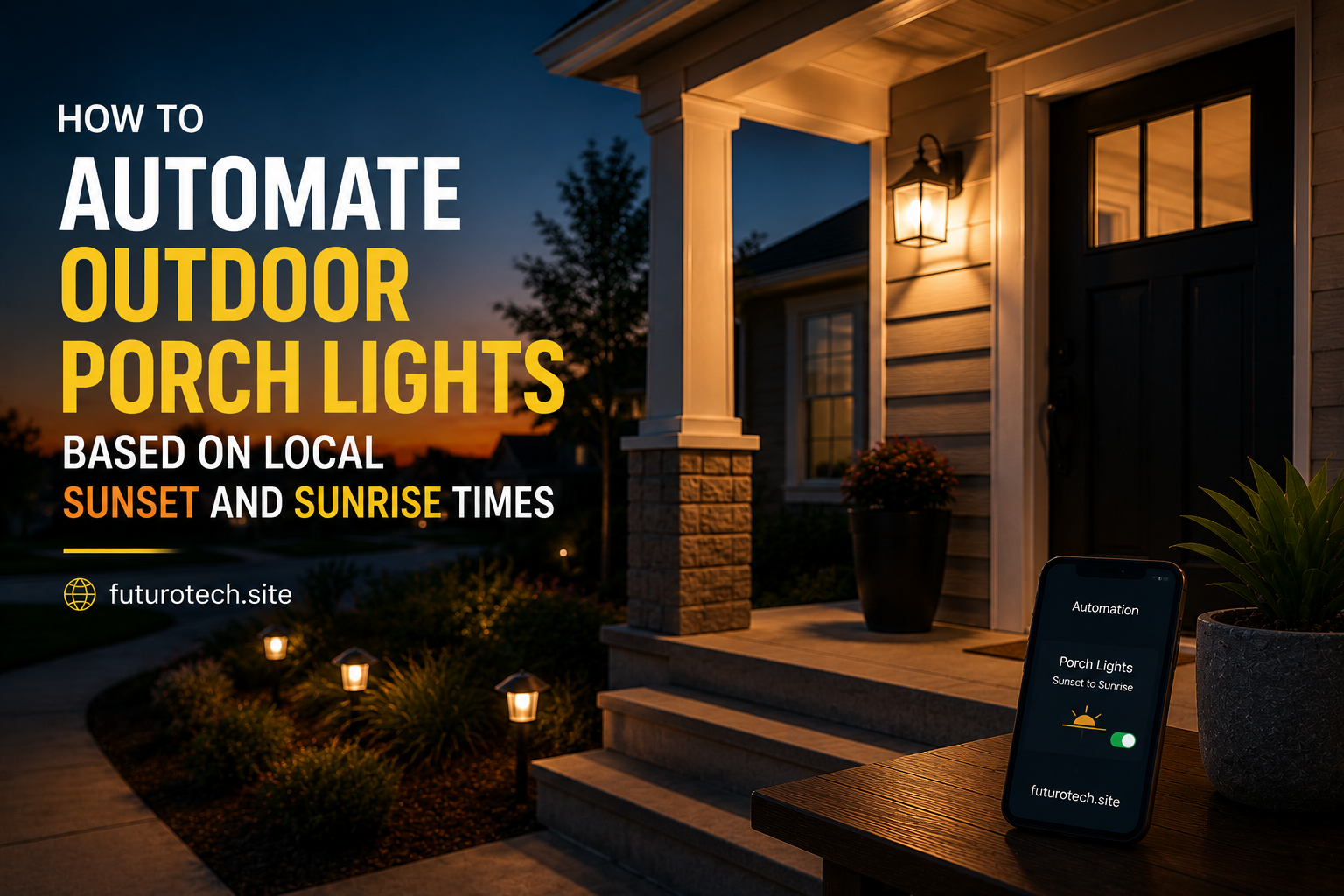
By connecting your outdoor porch lights to local sunrise and sunset times, your lights can follow the actual daylight cycle instead of relying on a fixed schedule that slowly becomes wrong as the seasons change.
Why Sunset and Sunrise Automation Makes More Sense Than Fixed Timers
A normal timer works like this:
“Turn on at 6:00 PM.”
Simple.
But the problem is that the sun does not care what time you picked.
In one month, 6:00 PM might be perfect.
A few months later, your porch light might turn on too early or too late.
Sun-based automation adjusts automatically.
The system checks your location and changes the timing as daylight changes throughout the year.
Check If Your Outdoor Light Setup Can Be Automated
Before creating a schedule, figure out what controls your porch light.
Common setups include:
- Smart bulbs.
- Smart switches.
- Smart plugs for outdoor lighting.
- Smart outdoor fixtures.
The method changes slightly depending on what you have.
A smart bulb replaces the light itself, while a smart switch controls the power going to the fixture.
Make Sure Your Smart Home System Knows Your Location
Sunrise and sunset automation depends on location data.
Your smart home app needs to know where your home is so it can calculate local daylight times.
Check:
- Home address settings.
- Time zone.
- Location permissions.
If the location is wrong, your lights may behave strangely.
A system thinking you are in another city can easily create a schedule that feels completely broken.
Create a Sunset-Based Porch Light Routine
The basic setup is usually:
- Open your smart home app.
- Create a new automation or routine.
- Select sunset as the trigger.
- Choose your porch light.
- Select the action to turn it on.
That is the foundation.
Your porch light now follows the sun instead of a clock.
Add a Sunrise Shut-Off Schedule
Leaving outdoor lights on all day wastes energy and defeats the purpose.
Create a second automation:
- Create another routine.
- Select sunrise as the trigger.
- Choose the same outdoor light.
- Set the action to turn off.
Now your porch light handles both sides automatically.
Add a Time Adjustment Around Sunset
Some people prefer lights to turn on slightly before sunset.
This is especially useful for:
- Driveways.
- Front entrances.
- Walkways.
Instead of turning on exactly at sunset, you can often set:
- 10 minutes before sunset.
- 15 minutes before sunset.
- 30 minutes before sunset.
That small adjustment can make the lighting feel much more natural.
Choose How Long the Porch Light Should Stay On
Not every porch light needs to run all night.
You can create different styles.
Simple Evening Setup
- On at sunset.
- Off at a specific bedtime.
Security-Focused Setup
- On at sunset.
- Dim overnight.
- Brighten again when motion is detected.
Always-Available Entry Lighting
- On at sunset.
- Off at sunrise.
The best setup depends on how you actually use your home.
Combine Porch Lights With Motion Sensors
A porch light does not always need to stay bright all night.
A smarter approach is combining sunset automation with motion detection.
For example:
- Dim light after midnight.
- Bright light when movement is detected.
- Return to normal afterward.
This saves energy while still keeping the area useful.
Test the Automation Before Trusting It
Do not wait until the first evening to find out something went wrong.
Test:
- Manual control from the app.
- Sunset trigger.
- Sunrise shut-off.
- Network connection.
Many smart home problems are simple things like a disconnected device or an outdated app.
Common Problems With Sunrise and Sunset Lighting
The Light Turns On at the Wrong Time
Check:
- Location settings.
- Time zone.
- Daylight saving settings.
The Automation Works Sometimes
This is usually a connection problem.
Check whether the smart bulb, switch, or hub is online.
The Light Does Not Respond at All
Check whether the light has power.
A smart bulb cannot run an automation if someone turned off the physical switch.
Think About Energy Use Too
Outdoor lights running every night add up over time.
Smart scheduling helps avoid accidental waste.
You can also:
- Reduce brightness.
- Use efficient bulbs.
- Create shorter schedules.
Small changes make a difference.
The Best Outdoor Lighting Automation Feels Boring
That might sound strange, but it is true.
A good smart home feature is something you stop thinking about.
You arrive home.
The porch is already lit.
Morning comes.
The light turns itself off.
No reminders.
No checking.
No walking outside in the dark wondering why you forgot again.
That is the real value of using sunrise and sunset automation. The technology quietly handles a tiny daily task and gives you one less thing to manage.